 Illustration
Reliable furniture manufacturer in China for hotels: verify fire safety, test reports, capacity, lead time, and defect handling before shipment.
In short
- Reliability is proven by third-party test reports, kept lead times and defects resolved before shipment, not by the lowest quote.
- Ask for BS 5852 or EN 1021 reports on upholstery and E1 boards with formaldehyde below 0.124 mg/m3 on casegoods.
- Confirm the factory runs the production lines it shows; subcontracted workshop orders lose control of lead time and finish.
To choose a reliable furniture manufacturer in China for your hotel project, skip the glossy trade show catalogs and focus on verifiable factory capability, compliance with local fire codes, and a track record of delivering projects of your scale without costly delays.
In short: The best partner is not the cheapest quote, but the one that can prove it meets your destination's safety standards, sticks to quoted lead times, and resolves defects before shipment. We stopped working with suppliers that can't share third-party test reports for core materials after a 2023 project in Bali faced customs holds over uncertified foam.
What safety standards should a China furniture manufacturer meet for hotel projects?
When you choose a reliable furniture manufacturer in China for your hotel project, the first filter should be documented safety compliance, not price. Most hotel projects in the EU, UK, and Middle East require upholstered furniture to pass EN 1021 or BS 5852 fire resistance tests, not just the domestic China standard GB 17927. On our last Dubai order, we provided test reports for 35mm thick high-density foam that passed BS 5852 crib 5 requirements, which cleared customs in three days instead of the two-week hold we saw with a competing supplier that skipped reporting. We also ask for E1 grade particleboard for all case goods, as it limits formaldehyde emissions to under 0.124 mg/m³, a requirement for most North American hotel brands. Skip verbal confirmation. Ask for signed test reports less than two years old.
How do you verify a factory actually has in-house production capacity?
A lot of companies will show you photos of a factory they don't own, then subcontract your order to small workshops when demand spikes. We recommend a 30-minute live video walkthrough. Skip pre-recorded tours. Ask to see the cutting saws, upholstery sewing stations, and spray booths in real time. For a 120-key hotel project, a capable factory should be able to produce roughly 40 units of case goods per day, which translates to a 45-day production lead time after design sign-off. We stopped specifying imported hardware for mid-sized projects after a 2023 order in Vietnam got delayed three weeks because our former supplier relied on a third-party hardware maker that ran out of 120mm drawer slides.
What cost components should you expect in a transparent furniture quote?
Many low-ball quotes leave out critical line items. These pop up later, erasing any initial savings. A fair quote will break down material costs, labor, packaging, export crating, and inland transport to the nearest port separately. For example, export-grade plywood crating for 100 hotel wardrobes typically adds 12% to the total order cost, compared to thin cardboard wrapping that will scratch finishes during transit. We build 5% buffer into every quote for minor design tweaks, since most hotel projects adjust drawer heights or fabric swatches halfway through production. This advice does not cover custom one-off luxury pieces, where artisan labor costs can shift by 30% or more depending on material rarity.
How does a strong QC process cut post-delivery headaches?
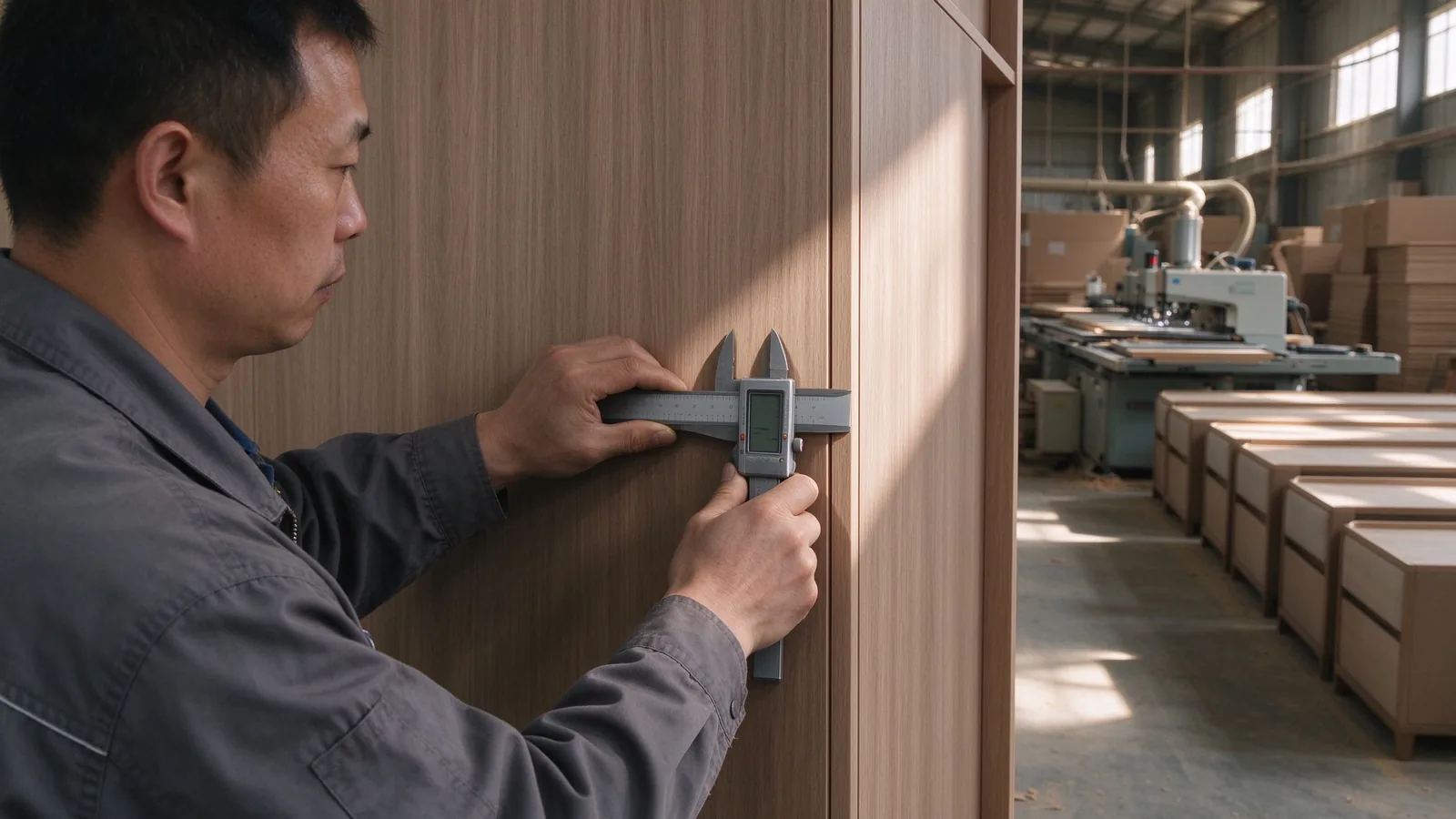
Once you choose a reliable furniture manufacturer in China for your hotel project, a structured QC process is the only way to avoid surprise costs after delivery. Our QC team rejects about one in twenty units during pre-shipment checks, catching loose joinery, fabric misalignment, or finish scratches before a container is sealed. We follow AQL 2.5 inspection standards, which means we sample 32 units out of a 200-unit order to test for critical defects, rather than spot-checking every fifth unit randomly. For most hotel projects, we schedule a pre-shipment inspection once 80% of the order is complete. We fix issues while units are still on the factory floor, not after they reach the job site. A common mistake buyers make is only checking for finish quality, not testing drawer glide function or door alignment on every sample. Those small functional issues lead to costly maintenance calls once guests start checking in.
What red flags signal you should walk away from a supplier?
When you choose a reliable furniture manufacturer in China for your hotel project, consistent communication and transparency matter more than the lowest possible bid. Watch for quotes that are 20% or lower than the average of three other comparable factory bids. That gap almost always means hidden subcontracting, lower-grade materials, or skipped safety testing. Another red flag is a supplier that refuses to share references from past hotel projects in your region. We once had a client come to us after a supplier promised a 30-day lead time for a 200-key resort, then missed the deadline by 45 days because the factory had overbooked its production line for wedding furniture orders. Reliable suppliers will share 2-3 past client contacts you can reach directly, no middleman filter. They will also be upfront about capacity gaps during peak production months, usually between March and May each year.
1. Request signed, dated safety test reports for fire resistance and formaldehyde emissions for any supplier shortlist. 2. Book a live video factory walkthrough to confirm in-house production capacity before requesting a formal quote. 3. Ask for a fully itemized quote that separates material, labor, crating, inland transport, and buffer costs. 4. Require a pre-shipment inspection aligned with AQL 2.5 standards before any container is sealed. 5. Follow up with 2-3 past hotel project references from the supplier to confirm on-time delivery and defect rates.