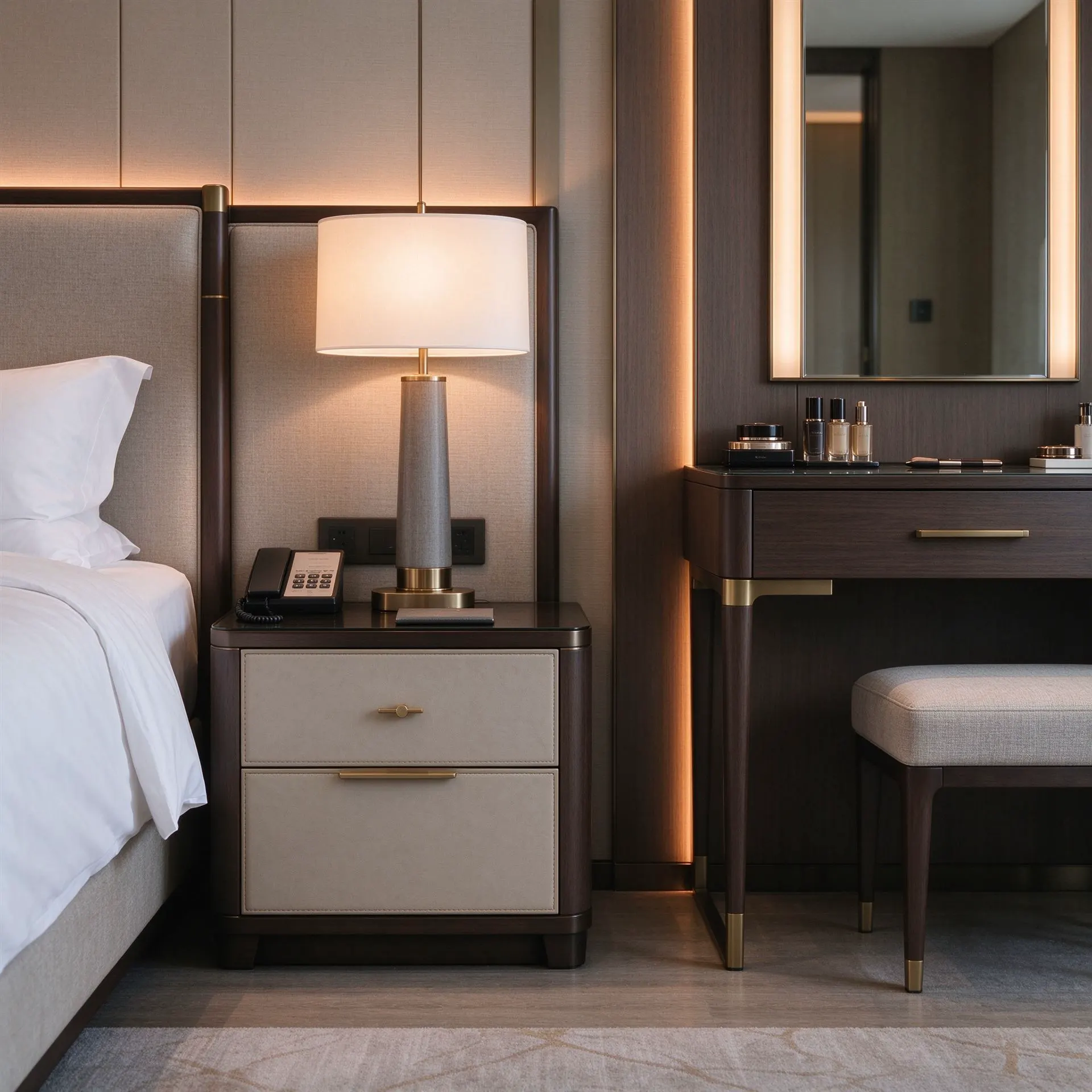
 Illustration
Repair and maintenance cost decides solid versus engineered wood in hotel bedrooms: refinishing cycles, humidity damage, and replacement lead time at year three.
In short
- The real cost difference appears at year three, when repair versus replacement is decided.
- Engineered panels resist humidity better; solid wood tolerates sanding and re-finishing.
- Match the material to housekeeping capability, not to the sample board.
Hotel furniture procurement requires balancing upfront cost, guest experience, and long-term operational ROI, so choosing between solid wood and engineered wood for bedroom pieces is a high-stakes decision that directly impacts property brand perception and lifecycle maintenance budgets.
Core Performance and Cost Tradeoffs
Solid wood is milled from whole tree trunks, offering a premium, natural grain patina that improves with age, making it ideal for luxury and boutique properties targeting high-end guest segments. It carries 30–50% higher upfront costs than engineered alternatives, requires periodic refinishing to avoid warping in humid coastal or high-altitude markets, and is vulnerable to scratch damage from heavy guest use. Engineered wood, manufactured from compressed wood fibers, veneers, and resin binders, delivers exceptional dimensional stability, resisting warping, cracking, and moisture damage even in high-traffic environments. It typically costs 40% less than equivalent solid wood pieces, with consistent finish quality that aligns with standardized global brand design guidelines.
Use Case Alignment for Hotel Operations
Neither material is universally superior for hotel use cases. Solid wood is best reserved for focal bedroom pieces like statement headboards or wardrobe doors in luxury properties, where tactile, natural finishes are a core brand differentiator. Engineered wood options, including commercial-grade high-density plywood and veneer-clad medium-density fiberboard, are ideal for high-wear components like drawer boxes, bed frames, and case goods in midscale, extended-stay, and economy properties, where a 7–10 year furniture lifecycle is the standard target. Many experienced furniture manufacturers offer hybrid builds, pairing engineered wood structural cores with thin solid wood veneer surfaces to deliver premium aesthetic at mid-range cost, cutting overall procurement spend while meeting rigorous commercial durability requirements.